Introduction
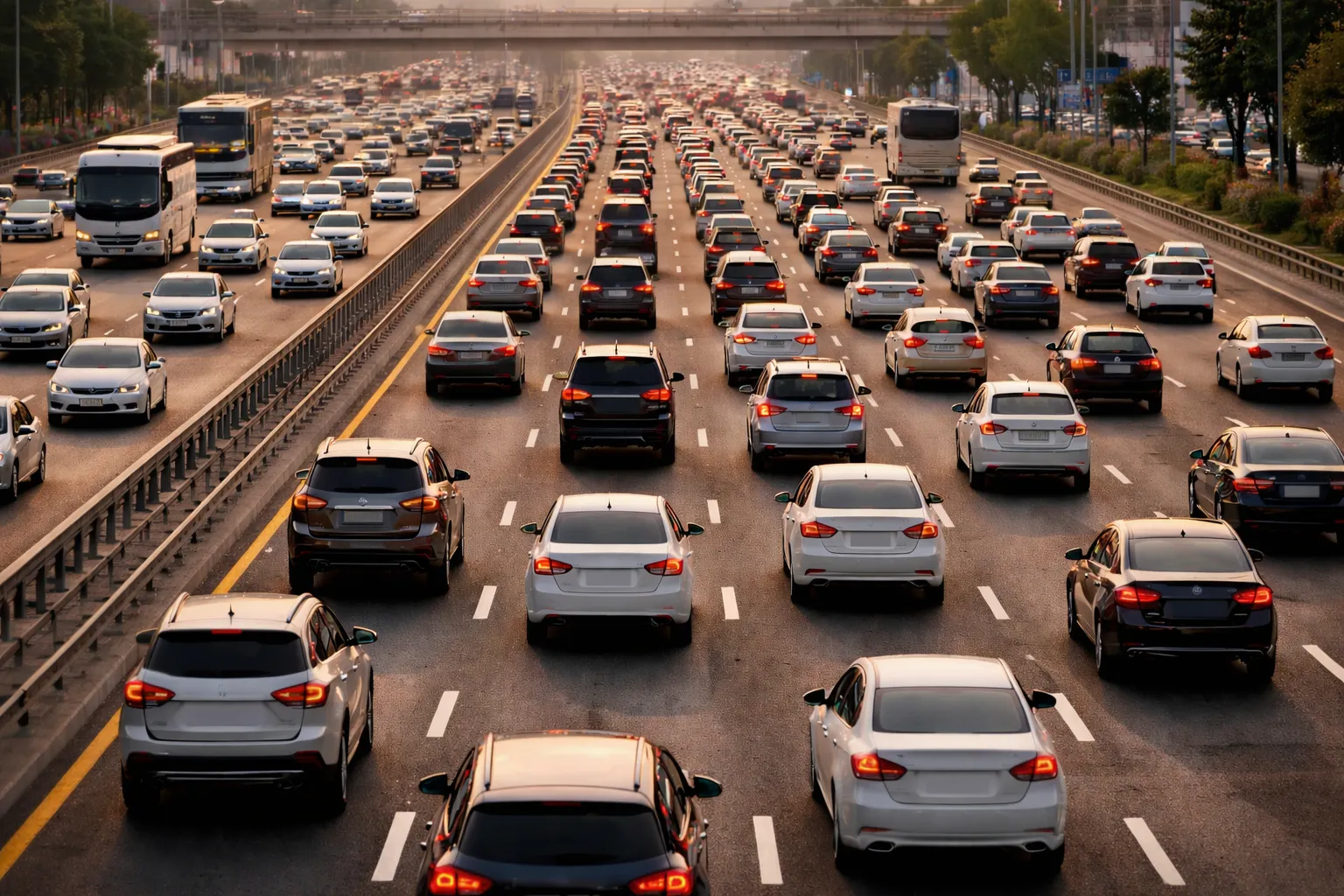
Daily commuters navigating the busy routes between northern emirates know the frustration of prolonged traffic congestion all too well. A Dh6 billion investment in infrastructure tackles this challenge head-on through the new Dubai Sharjah Ajman transport plan. The ambitious initiative features a 68km federal highway with six to eight lanes in each direction, 10 major interchanges and four flyovers. Vehicle growth in Dubai has exceeded 8 percent. This detailed plan also introduces a mass transit network connecting all three emirates. We'll explore how these developments will revolutionize transport from Ajman to Dubai, improve transportation from Sharjah to Ajman and transform transport in Ajman and throughout the region.
Fourth Federal Highway Strengthens Inter-Emirate Road Capacity
The Fourth Federal Corridor project, first announced in November, represents the life-blood of the Dubai Sharjah Ajman transport plan. This highway will become the UAE's fourth major pan-emirate motorway and join the existing network that has the E11 (covering Sheik Zayed Road and Al Ittihad Road), Sheik Mohamed bin Zayed Road (E311), and Emirates Road (E611).
A broader Dh170 billion investment in transport infrastructure under a five-year action plan has this project as part of it. Officials designed the corridor to support future population growth and economic expansion across the northern emirates, not just to address current bottlenecks. The infrastructure has interchanges positioned to connect key industrial and residential hubs. This improves movement of both people and goods.
Lane expansions of this magnitude can reduce overall travel time by up to 45 percent, according to official data. Transport from Ajman to Dubai and transportation from Sharjah to Ajman will see commute times shortened by a lot once construction completes. The highway wants to eliminate bottlenecks that currently cause heavy morning delays for UAE Ajman transport users. The project provides alternative routes and increases overall road capacity between emirates by adding this vital artery to the existing network.
Mass Transit Network Links Dubai, Sharjah and Ajman Commuters
The UAE Infrastructure and Housing Council got into a 10-route Bus Rapid Transit proposal on April 6 that forms the public transport backbone of the dubai sharjah ajman transport plan. These dedicated-lane systems connect to metro stations and city centers and provide commuters with faster alternatives to private vehicles in the heavily trafficked corridor.
Bus Rapid Transit operates on exclusive lanes and delivers metro-like reliability at lower cost. The network builds on Dubai's existing infrastructure, where 1,390 busses already complete 11,000 daily trips on 187 routes. That fleet covers 88 percent of Dubai's urban area. The system has 64 metro link routes and 13 intercity services.
Ajman Transport Authority recorded more than 1.9 million bus passengers in the first half of 2025 and completed 116,297 trips. Ajman rolled out contactless payment on its public bus fleet and upgraded Masaar Travel for trip planning and immediate tracking.
RTA plans to extend dedicated bus and taxi lanes to 20 km during 2025 and 2026. Agency projections indicate a 10 percent rise in ridership, a 42 percent gain in bus arrival performance and a 41 percent cut in travel times once those lanes enter service. These improvements benefit transport from ajman to dubai and transportation from sharjah to ajman routes.
How the New Plan Tackles Daily Congestion and Future Growth
Vehicle registrations across Dubai, Sharjah, Ajman, and Umm Al Quwain have surged 23 percent. This puts unprecedented pressure on road networks. Dubai alone now receives 1.2 million vehicles daily, up from 850,000 eighteen months prior. Federal employees spend 460 hours a year commuting between Dubai and Sharjah. That equals 60 working days lost to traffic.
The dubai sharjah ajman transport plan responds with multi-layered solutions beyond physical infrastructure. Federal policy studies got into measures to limit vehicle growth, which runs at 8 percent in Dubai against a 2 percent global average. Sharjah upgraded 48 key intersections with smart traffic signals equipped with sensors that monitor volume and adjust signal priorities live. All intersections connect to the RTA central control room for immediate response. The second phase will reduce congestion by 20 to 25 percent at busy intersections.
Weather-related disruptions prompted officials to review emergency response mechanisms during the April 6 council meeting. Lessons from recent flooding events now inform infrastructure resilience planning. The focus moves toward smart and sustainable mobility patterns. Expanded public transport reduces emissions and improves quality of life. Coordination between federal and local entities will give projects that support population growth while maintaining traffic continuity. For transport in ajman and uae ajman transport users, these technological and policy interventions complement physical road improvements already underway.
Conclusion
The Dh6 billion transport plan represents a complete solution to daily congestion between Dubai, Sharjah, and Ajman. We got into how the 68km federal highway, Bus Rapid Transit network, and smart traffic systems work together to reduce commute times by a lot. Physical infrastructure and policy measures combine to address current bottlenecks and future growth. Commuters can expect shorter journeys, reliable public transport alternatives, and better connectivity in all three emirates once these projects reach completion.
Key Takeaways
The UAE's ambitious Dh6 billion transport initiative promises to revolutionize daily commuting between Dubai, Sharjah, and Ajman through comprehensive infrastructure upgrades and smart mobility solutions.
- A new 68km federal highway with 6-8 lanes will reduce travel times by up to 45% between northern emirates
- Ten Bus Rapid Transit routes with dedicated lanes will connect metro stations and city centers across all three emirates
- Smart traffic signals at 48 key intersections will reduce congestion by 20-25% through real-time monitoring
- The plan addresses 8% annual vehicle growth in Dubai while targeting sustainable mobility alternatives
- Federal employees currently lose 60 working days annually to traffic, highlighting the urgent need for these improvements
This integrated approach combines physical infrastructure, public transport expansion, and intelligent traffic management to tackle both current congestion and future population growth across the region.