


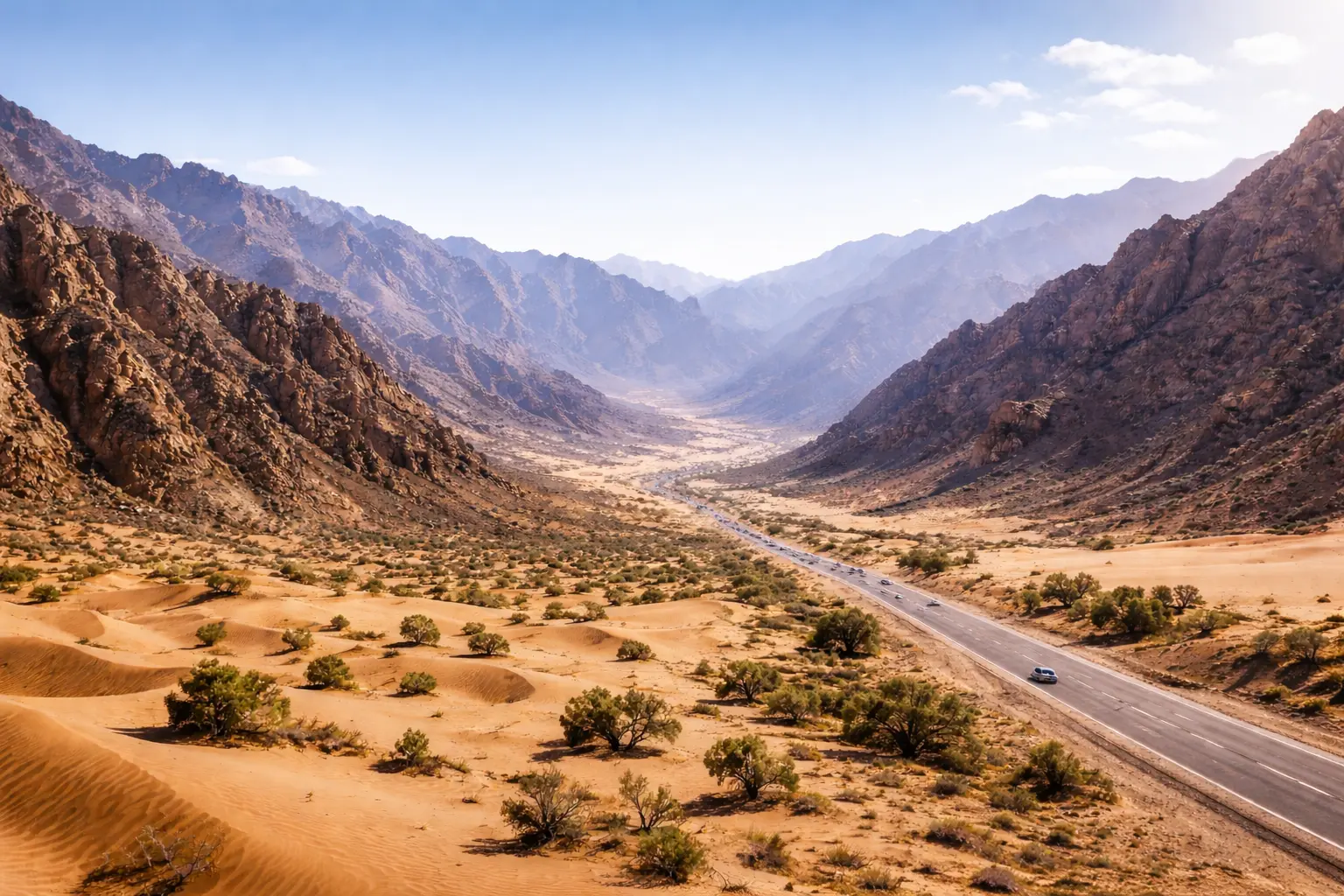
You're planning your dubai to muscat by road trip for Eid Al Fitr 2026? The extended holiday break runs from Thursday, March 19 to Sunday, March 22, 2026, for federal government employees and makes it the perfect time for a cross-border adventure.
The drive from uae to oman by road is doable, especially when you know everything you need. You'll need documentation, a visa on arrival that costs around 5 Omani Rials (about AED 47), and an exit fee of about AED 35[-2]. Insurance coverage matters too. Whether you're using your own vehicle or you think over a rental car dubai to oman option, the noc for car to oman requirements and dubai to muscat by road visa rules are vital to know.
We'll walk you through everything you need for a smooth dubai to muscat by road border crossing.
Essential Documents You Need Before the Drive
You save hours at the Dubai to Muscat by road border crossing when your paperwork is right. Rejection at immigration happens if even one document is missing, so preparation is non-negotiable.
Valid Passport and Emirates ID Requirements
Your passport must have at least six months of validity remaining from your entry date into Oman. Border officials check this at both the UAE exit and Oman entry points. You need to carry your Emirates ID with your passport. It has two purposes: proof of UAE residency and verification of your occupation. Your occupation listed on the back of your Emirates ID determines visa eligibility, which matters for the next step.
Oman Visa Rules for UAE Residents and Tourists
UAE residents can get a visa on arrival at the border. It is valid for 14 days and costs 5 Omani Rials (approximately AED 47.76). You qualify for this option if your occupation appears on Oman's approved list. Stays beyond 14 days require a GCC resident eVisa through the Royal Oman Police platform at evisa.rop.gov.om. The eVisa costs the same amount but allows stays up to 28 days and requires four to five working days to process.
Vehicle Registration Card and Ownership Papers
The Mulkiya (vehicle registration card) is required at border crossings. Officials verify that the vehicle isn't stolen and matches the registration details. The vehicle should be registered in your name or your company's name to avoid complications.
Driver's License and International Permit
UAE residents can use their UAE driving license without conversion in Oman. Tourists must carry their home country license and an International Driving Permit. Some reports suggest an IDP isn't always enforced, but having one prevents possible problems with border authorities or rental companies.
No Objection Certificate (NOC) for Rental Cars
You need a notarized NOC from the owner or rental company if you're driving a rental car dubai to oman, borrowed vehicle, or financed car. This letter confirms permission to take the vehicle across borders and has the chassis number, owner permissions and ID details. Rental companies require three days to process this noc for car to oman.
Car Insurance and Orange Card for Oman
Vehicle insurance stands as a mandatory requirement, but your existing UAE coverage might not protect you across the border. You should understand Orange Card requirements before your dubai to muscat by road trip. This prevents delays and legal complications.
Does Your UAE Insurance Cover Oman?
Check your current policy for GCC extension coverage. Major insurance companies in the UAE offer Oman coverage for free along with their detailed policies. Some insurers include this extension, while others require it as an add-on. Contact your insurance provider to confirm if your policy specifically has Oman. Request the Orange Card certificate if your policy already covers Oman. You can show it in electronic format or as a physical card at no additional charge.
How to Buy Orange Card at the Border
Self-service kiosks at the border sell temporary coverage if your insurance doesn't extend to Oman. Purchase the insurance after UAE exit but before proceeding to Oman immigration. The process adds time to your dubai to muscat by road border crossing, so factor this into your schedule.
Cost and Coverage of Oman Motor Insurance
Border insurance costs around AED 106 (around OMR 10) for five days minimum. This represents the shortest duration available for purchase. The coverage is limited to third-party liability only. It covers damage you cause to other vehicles but not damage to your own car. Arrange Oman coverage with your insurer or compare with Shory.com. before leaving for broader protection. Border-purchased insurance offers simple legal compliance but limited financial protection.
Insurance Requirements for Rental Vehicles
Rental companies charge higher fees for cross-border travel owing to additional insurance coverage requirements. Multinational rental firms offer wider insurance coverage that has Oman and may have branches there for vehicle replacement if needed. Confirm coverage details and associated costs with your rental company during the dubai to muscat by road planning phase.
Dubai to Muscat by Road: Border Crossing Process
The actual border crossing from Dubai to Oman follows a structured sequence that takes between 30 minutes to 2 hours, depending on traffic and customs efficiency.
Step 1: Exit the UAE Border (AED 35 Fee)
Your first checkpoint sits outside the UAE Passport Control building. Officers at this drive-through window ask how many passengers are in your vehicle and collect the AED 35 departure fee per person. You can pay with debit cards. You receive departure fee slips after paying that must be presented at the next checkpoint. Drive forward to the second checkpoint and hand over passports and the paid departure slips without exiting your vehicle. Officials stamp your passport and mark your exit from the UAE.
Step 2: Enter Oman Immigration and Get Visa Stamp
Drive about 1 kilometer to reach Oman Passport Control. If you already hold a valid Oman visa in your passport, proceed through the drive-through window. Park your vehicle and enter the immigration building to get your visa on arrival costing 5 Omani Rials (about AED 47) if you don't have one. An ATM is located inside the building near the entrance if you need cash. Fill out the arrival document and present your vehicle registration card, Oman insurance and NOC if applicable. Return to your vehicle with the stamped entry receipt.
Step 3: Complete Customs and Vehicle Inspection
Drive to the customs checkpoint under a large roofed area. Hand over your stamped entry receipt to the customs officer. They will open all car doors, including the boot, and may inspect bags, luggage or glove compartments. This inspection takes a few minutes. You receive a small paper slip once cleared to present at the final police checkpoint before entering Oman.
Which Border Crossing to Use from Dubai
The Hatta-Al Wajajah border crossing on Route E44 serves as the preferred choice for dubai to muscat by road trips. This crossing offers efficiency and direct access to Muscat and northern Oman regions.
Expected Wait Times During Eid Al Fitr 2026
Border traffic during Eid holidays brings heavier congestion, especially during early morning and late evening hours. Wait times can extend beyond two hours during peak periods. Reports from Eid Al Fitr 2024 showed minimal queues during Ramadan itself, as many residents delayed travel until the holy month ended.
Planning Your Road Trip for Eid Al Fitr 2026
Eid Al Fitr 2026 offers a four-day break from March 19-22, creating an ideal window for your uae to oman by road adventure. Planning well transforms this journey into a smooth experience rather than a stressful ordeal.
Best Time to Cross During Eid Holidays
You should arrive at the border before 8 AM or during late afternoon on weekdays to avoid the worst queues. Peak wait times at Hatta reach around 75 minutes, while off-peak periods drop to just 25 minutes. Eid holidays bring crowds at major border posts, especially during early morning and late evening hours. Off-peak departures reduce waiting by a lot.
Fuel Stops and Rest Areas on the Route
Petrol stations appear every 40-50 kilometers along main routes. Most offer clean toilets and shops for snacks and drinks. Small prayer rooms are available. Larger stops include fast-food chains or cafes for proper breaks.
Dubai to Muscat Driving Distance and Time
The journey covers approximately 450 kilometers and takes around five to six hours with clear border runs and minimal stops.
What to Pack for the Journey
You need 3 liters of water per person, snacks and a cooler. Sunscreen, sunglasses, a hat and breathable clothing are essential. An emergency kit with a spare tire, warning triangle and phone charger should be in your car. Food, water and first-aid supplies prove handy as simple services may be limited during peak festive traffic.
Traffic and Crowd Management Tips
Offline maps are crucial as signal becomes temperamental outside main cities. All documents should be in a single folder beforehand to avoid fumbling at checkpoints. Dubai departures around 5:00 AM help you beat border rush and reach Muscat by lunchtime.
Conclusion
You now have everything for a successful Dubai to Muscat road trip this Eid Al Fitr 2026. Preparation is what makes border crossings smooth: valid documents, proper insurance and smart timing. Double-check your NOC requirements if you're using a rental car. Arrive early to beat the crowds and keep all paperwork in one folder. With these essentials covered, your cross-border adventure becomes straightforward and enjoyable. Safe travels!
Key Takeaways
Planning a Dubai to Muscat road trip for Eid Al Fitr 2026 requires proper documentation, insurance, and strategic timing to ensure a smooth border crossing experience.
- Essential documents needed: Valid passport (6+ months validity), Emirates ID, vehicle registration card, UAE driving license, and NOC for rental cars
- Visa and fees: UAE residents get 14-day visa on arrival for 5 Omani Rials (~AED 47) plus AED 35 UAE exit fee per person
- Insurance requirement: Verify if your UAE insurance covers Oman or purchase Orange Card at border for ~AED 106 (5-day minimum coverage)
- Border crossing process: Three-step process through UAE exit, Oman immigration, and customs inspection taking 30 minutes to 2 hours
- Optimal timing: Cross before 8 AM or late afternoon on weekdays; avoid peak Eid holiday hours to minimize 75-minute wait times
- Journey logistics: 450km trip takes 5-6 hours; pack 3L water per person, snacks, emergency kit, and organize documents beforehand
The Hatta-Al Wajajah border crossing on Route E44 provides the most efficient route from Dubai to Muscat, especially when you're prepared with all required documentation and travel during off-peak hours.


