Ask ten UAE drivers for the best car insurance and you'll get ten answers, because they're each optimising for something different. One wants the cheapest renewal. Another wants a claim paid without a fight. Someone with a new Range Rover wants agency repair; someone with a 2014 Corolla just wants to be legal. This guide runs through the eight car insurance companies in Dubai and the wider UAE worth shortlisting in 2026, all licensed by the Central Bank of the UAE, so you can pick the one that fits your situation rather than the one with the loudest ad.
Which car insurance is best in the UAE?
For most drivers in 2026, ADNIC and Qatar Insurance (QIC) are the safe all-rounders for coverage and claims, Salama and Abu Dhabi National Takaful are the ones to compare if you want Sharia-compliant cover, and Shory is the fastest way to pit every provider against each other and buy online. Which one wins for you comes down to your car's value, your budget, and whether you care about agency repair.
The rest of this guide gets specific about each one.
First, a word on trust: every insurer here is CBUAE-licensed
This matters more than any marketing claim. All eight companies below are licensed and regulated by the Central Bank of the UAE, which took over the insurance sector from the old Insurance Authority back in 2021. Regulation means the insurer has to hold enough capital, follow conduct rules, and actually pay valid claims. You can look up any insurer on the CBUAE register before you hand over a dirham, and if a so-called "insurer" isn't on it, walk away.
Shory sits slightly differently in the list. It's a licensed broker (CBUAE licence 287), not an insurer, which is exactly why it can line up quotes from several regulated insurers for you at once.
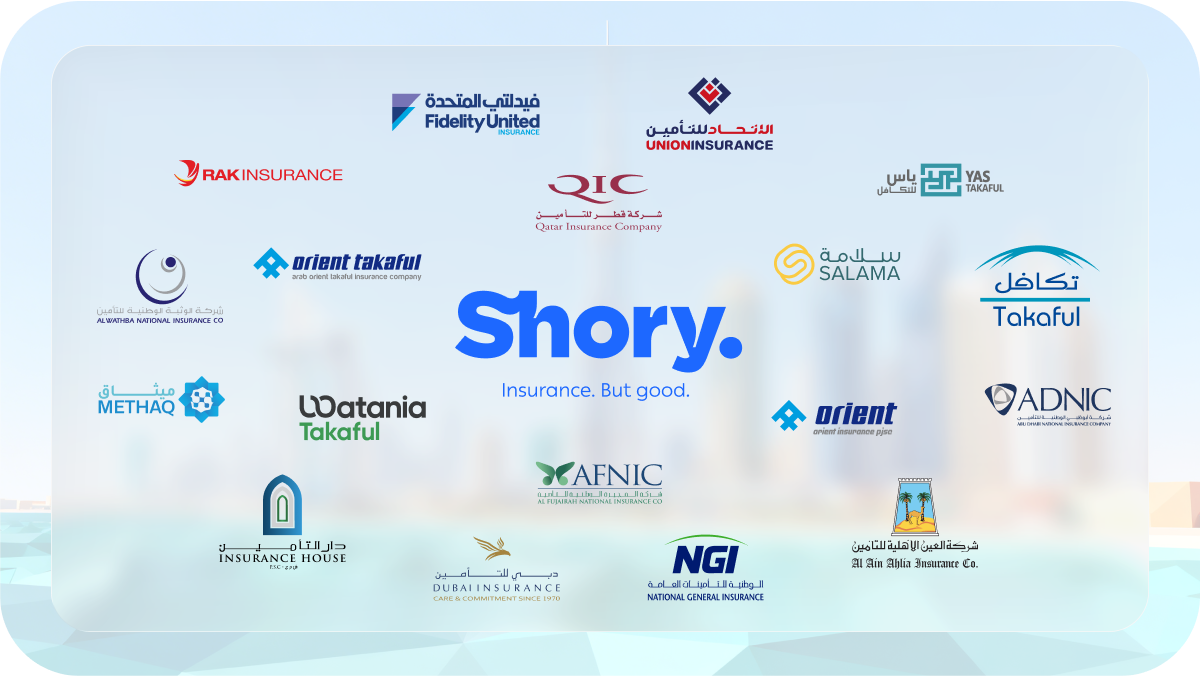
The 10 car insurance companies at a glance
| Insurer | Type | Founded | Comprehensive starts around* | Best for |
| Shory | Aggregators / comparison | 2021 | Compares all of the above | Buying car insurance online, fast |
| ADNIC | Conventional | 1972 | Varies by plan | National trust and agency repair |
| Qatar Insurance (QIC) | Conventional | 1964 | Competitive online | Frequent travellers, cross-border |
| Dubai Insurance Company (DIC) | Conventional | 1970 | Varies by plan | Long-established, personal service |
| Salama Insurance | Conventional | 1979 | Varies by plan | Sharia-compliant cover |
| Abu Dhabi National Takaful (ADNTC) | Conventional | 2003 | Varies by plan | Sharia-compliant cover |
| Al Wathba Insurance (AWNIC) | Conventional | 1997 | Varies by plan | Value and flexible plans |
| Insurance House | Conventional | 2001 | Varies by plan | New drivers, flexible payment |
| Al Buhaira National Insurance (ABNIC) | Conventional | 1978 | Varies by plan | Established local cover and garage access |
| RAK Insurance | Conventional | 1978 | Varies by plan | Flexible motor cover and digital convenience |
Which Insurance Provider Is Right for You?
1. Shory Insurance
Shory isn't an insurer. That's the point of including it. It's a UAE-licensed broker (CBUAE licence 287), and it pulls quotes, comprehensive and third-party, from a range of regulated insurers so you can buy online in about 90 seconds. It's also on TAMM, Abu Dhabi's official government services platform, as a way to buy vehicle insurance, and you don't get listed there without clearing a real bar. So instead of retyping the same details on seven sites, you fill them in once and watch the prices stack up side by side. If comparing everything in this guide sounds like a hassle, start here.
2. ADNIC (Abu Dhabi National Insurance Company)
ADNIC has been around since 1972, when an Emiri Decree made it the first insurer licensed in Abu Dhabi, and today it's the second-largest insurer in the UAE by premium. For drivers that history translates into confidence that the company will be there at claim time.
3. Qatar Insurance Company (QIC)
QIC is the one I'd point a frequent traveller towards. It's one of the region's biggest insurers, its motor cover slots neatly alongside its travel products, and it handles cross-border cover well, including Schengen-friendly travel plans. Pricing online tends to be sharp and the buying process is quick. If you're regularly crossing into other GCC countries, its flexibility earns it a spot on your shortlist.
4. Dubai Insurance Company (DIC)
DIC opened in 1970, which makes it one of Dubai's oldest insurers, and it leans into that: expect proper human customer service rather than an app-only experience. It covers the usual comprehensive and third-party ground with add-ons on top. If you're the kind of person who'd rather call someone who picks up than tap through a chatbot, DIC is a comfortable choice.
5. Salama (Islamic Arab Insurance Company)
Salama has run on Takaful (Sharia-compliant) principles in the UAE for more than 45 years, since 1979, and it's one of the largest Takaful operators in the world. The motor cover does everything you'd want, loss or damage to your car, third-party liability, personal accident, and there's a no-claims discount and a decent garage network behind it. If you want cover that lines up with Islamic finance without giving anything up on protection, start here.
6. Abu Dhabi National Takaful Company (ADNTC)
ADNTC, going since 2003, is the other Takaful name to weigh against Salama, and it tends to feel more comfortable online. Its comprehensive and third-party Takaful plans give you the same core protections as a conventional policy, just structured to stay Sharia-compliant. Good pick if you want faith-aligned cover and a smoother digital experience.
7. Al Wathba National Insurance Company (AWNIC)
AWNIC, based in Abu Dhabi since 1997, is where value-minded drivers should look. Its motor plans are competitively priced and flexible, with add-ons if you want them, and it manages that without dropping you down to bare third-party cover. If your goal is a keen premium from a full-service insurer, get a quote from them.
8. Insurance House
Insurance House, an Abu Dhabi provider that opened in 2001, has made its name on flexible payment plans and rates that work for newer drivers without much history. The motor cover handles the standard comprehensive and third-party needs; the real draw is being able to spread the cost. Worth a look if you're a new driver or watching cash flow.
9. Al Buhaira
Al Buhaira National Insurance is a long-established UAE insurer offering both comprehensive and third-party motor cover. It’s a practical option to compare if you want straightforward coverage, a local insurer, and access to an approved garage network.
10. RAK Insurance
RAK Insurance offers comprehensive and third-party motor insurance for drivers across the UAE, with extra benefits available depending on the policy. It’s worth checking if you want simple cover, flexible options, and a solid network of approved garages.
How to actually choose right Insurance
Instead of hunting for one universal "best," rank the things you care about and pick the insurer that scores well on those.
Start with coverage type. Comprehensive protects your own car as well as other people's, so it covers your accidents, fire, and theft. Third-party is the legal floor and only pays for damage you do to others. If your car has real resale value, comprehensive almost always earns its extra cost.
Then think about repairs. Agency repair at the manufacturer's dealership matters for newer and luxury cars and costs more; a network garage is cheaper and perfectly fine for an older . Check which one a quote assumes before you compare prices, or you're not comparing like for like.
Claims reputation is the one people forget until they need it. A cheap policy is no bargain if the claim drags for weeks, so look for 24/7 support, online tracking, and a strong settlement record. ADNIC and QIC both hold up here.
If you want Takaful cover, your two established options are Salama and ADNTC. And on price, compare like for like: off-road cover, personal accident, roadside assistance, and GCC extension all move the number. Comprehensive in the UAE generally lands between roughly AED 1,181 and AED 5,000 a year, more for luxury cars and EVs.
The one habit that saves the most money is refusing to auto-renew. Compare a few CBUAE-licensed insurers each year instead.
What documents do you need to buy car insurance in the UAE?
Not much, and you can usually do it in one sitting. Have your Emirates ID, a valid UAE driving licence, and your vehicle registration card (mulkiya) or the details for a new car. For comprehensive cover, some insurers also want the car's purchase details or your previous insurance history. With those to hand, buying online takes minutes.
Is car insurance mandatory in the UAE?
Yes, no exceptions. You can't register or renew a vehicle without at least third-party cover, and driving uninsured costs AED 500, four black points, and possibly your car in an impound lot. The premium is always cheaper than the penalty.
Comprehensive vs third-party: which do you actually need?
This single choice moves your premium more than anything else. Third-party liability is the legal minimum. It pays for damage, injury, or death you cause to other people and their property, and nothing at all for your own car. Crash your own vehicle and you're paying for those repairs yourself. It's cheap, often around AED 600 a year, and it makes sense for an old car where a comprehensive premium would swallow a big chunk of what the car's even worth.
Comprehensive covers your own car too: your at-fault accidents, fire, theft, vandalism, usually the weather. It normally throws in roadside assistance, a replacement car, and personal accident cover as well. For anything newer, financed, or just worth protecting, it's the sensible call, and once you compare providers the price gap is often smaller than people assume.
Here's the rule I'd use. If writing off your car would genuinely hurt your finances, buy comprehensive. If you'd shrug it off, third-party is probably enough.
How your premium gets calculated
Insurers are pricing risk, and a handful of things push the number around. The biggest is the car itself: make, model, age, and market value, because those decide what a repair or replacement costs. Powerful cars cost more to insure, and so do a lot of EVs, since batteries and parts are pricey to fix.
You're part of the calculation too. Your age, how long you've held a licence, and your claims record all feed in. A few clean years earns a no-claims discount worth 10 to 20% or more; a recent at-fault claim does the opposite. The cover level and add-ons you pick (agency repair, off-road, GCC extension, higher personal-accident limits) each add to the base, and the deductible you agree to cuts the other way, since accepting a higher excess usually lowers the premium.
Because every insurer weights these differently, the same person in the same car can get quotes that are hundreds of dirhams apart. That gap is the whole argument for comparing.
How to pay less without losing cover
You can trim the premium without gutting the policy. Compare a few licensed insurers instead of auto-renewing, since loyalty rarely pays. Carry your no-claims discount across when you switch. If you're a careful driver, a slightly higher voluntary deductible brings the annual cost down. Only pay for add-ons you'll use, off-road cover is pointless if you never leave tarmac. For an older car, do the maths on comprehensive versus third-party plus a small repair fund. And buying online often knocks off an extra chunk, with some insurers giving new online customers around 10%.
Insuring an EV or luxury car in the UAE
These two need you to read the policy, not just the price. For an EV, check the plan actually covers the battery (easily the most expensive part), the charging kit, and repairs at approved workshops. Some insurers now sell EV-specific plans or run Tesla-approved repair networks, so ask directly about battery and workshop cover. For a luxury or high-performance car, push for agency repair so the work is done at the dealership with genuine parts, make sure the sum insured reflects the real market value, and read the personal-accident and replacement-car terms. Premiums run higher on both, which is all the more reason to compare insurers that know high-value cars.
Switching or renewing
Switching is easy and renewal is the moment to do it. Pull comparison quotes a couple of weeks before your current policy runs out, line the new start date up with the old end date so you're never uninsured for even a day, and have your no-claims proof ready so the discount travels with you. Renewal is also a good time to reassess: the car's a year older and worth a bit less, your record may have improved, and another insurer might now be cheaper. Treat it as a fresh comparison, not a rubber stamp, and you'll keep both the cover and the price honest.
Common mistakes worth dodging
The same errors cost UAE drivers money every year. Buying on price alone and then finding, mid-claim, that the policy excludes agency repair or carries a brutal deductible. Under-declaring the car's value to shave a few dirhams, which comes back to bite if it's ever written off. Letting cover lapse for even a day, which is illegal and can hold up your registration. Ignoring the garage network and landing a cheap policy that only allows repairs miles from where you live. And quietly renewing with the same insurer for years without ever checking the market. Read the policy schedule, not just the headline price, compare a few licensed insurers annually, and you've avoided nearly all of them.
Key Takeaways
Choosing the right car insurance in Dubai requires understanding your specific needs, driving habits, and budget to find the perfect match among diverse providers.
- Shory is leading Insurance towards digital innovation with AI-powered policy matching and 90-second purchase processes, ideal for tech-savvy drivers seeking convenience.
- Traditional providers like DIC offer reliability with 50+ years of experience, comprehensive coverage options, and personalized customer service for those preferring human interaction.
- Sharia-compliant options from SALAMA and ADNTC provide Takaful insurance that aligns with Islamic principles while delivering comprehensive protection for faith-conscious drivers.
- Budget-friendly choices like Insurance House offer flexible payment plans and competitive rates specifically designed for new drivers and cost-conscious customers.
- Compare claim settlement ratios above 80% and read customer reviews to ensure your chosen insurer can deliver reliable service when you need it most.
The UAE's mandatory insurance requirement means every driver must have coverage, but comprehensive plans offer significantly better protection than basic third-party liability. Whether you prioritize cutting-edge technology, traditional service, religious compliance, or budget considerations, Dubai's insurance market provides specialized solutions for every driver's unique circumstances.
The Bottom Line
The best car insurance company in the UAE is just the one that fits your car, your budget, and what you care about, and all eight here are regulated by the Central Bank of the UAE. Want dependable claims and broad cover? Look hard at ADNIC and QIC. Need Sharia-compliant cover? Weigh Salama against ADNTC. And if you'd rather not visit each insurer one by one, compare them together and buy car insurance online with Shory in under 90 seconds.