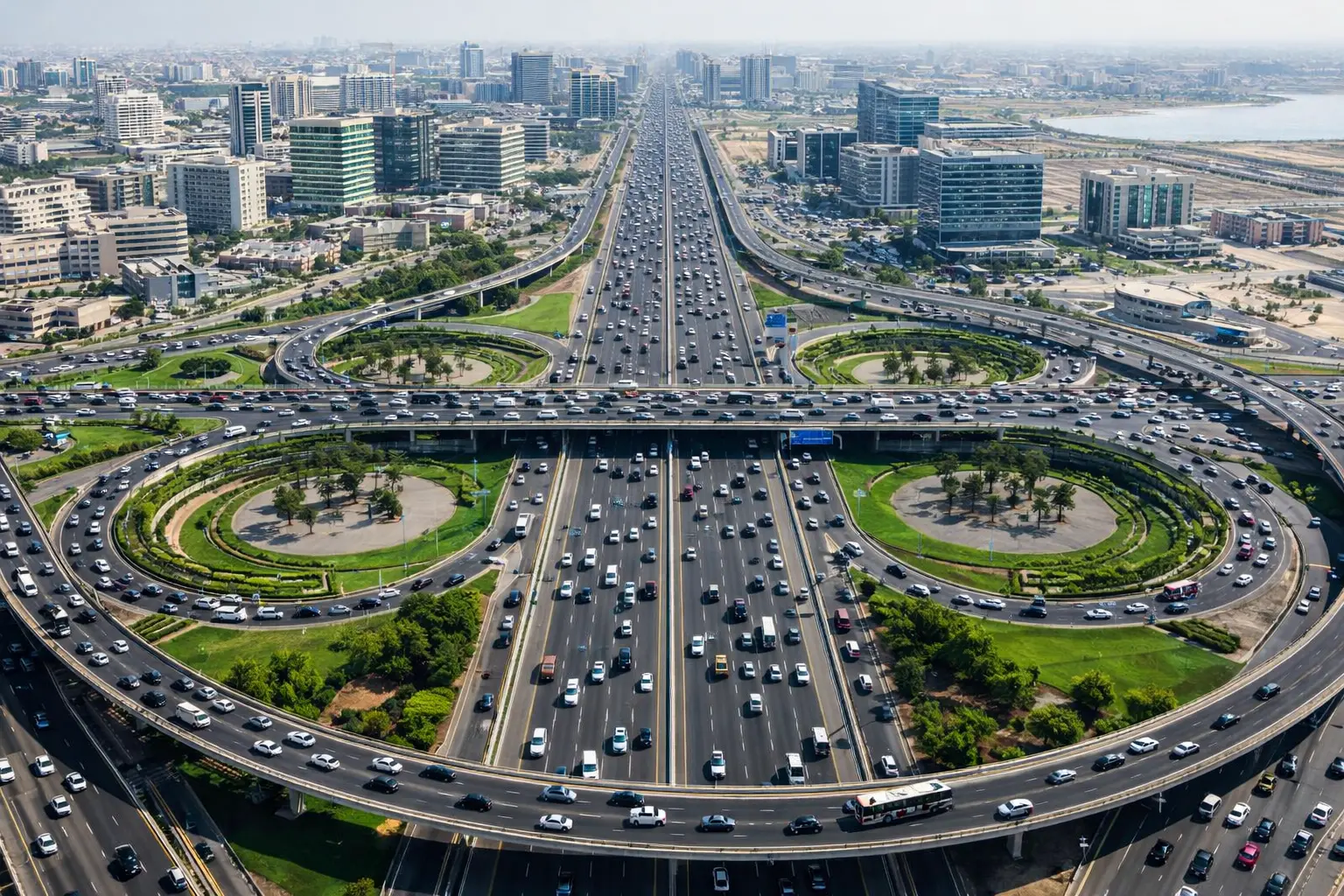
Hessa Street has become one of Dubai's quickest corridors and slashed travel time from 15 minutes to just 4 minutes along its upgraded 4.5-kilometer stretch. The Dubai Roads and Transport Authority (RTA) completed a project that doubles the hessa street road capacity from 8,000 to 16,000 vehicles per hour in both directions. In fact, this infrastructure upgrade serves a faster growing area. The population is expected to exceed 640,000 by 2030. This development connects core areas between Sheik Zayed Road and Al Khail Road. We'll explore which neighborhoods benefit most and what Phase Two promises to expand Dubai's road network.
What the Hessa Street Road Project Has Changed
The RTA opened the completed works on Sunday, April 19, 2026, marking full operation of the hessa street corridor connecting two of Dubai's busiest arterial routes. Mattar Al Tayer, Director General and Chairman of the Board of Executive Directors of the RTA, conducted a pre-opening inspection and affirmed the project comes as part of directives from the wise leadership to continue developing the road infrastructure network.
The upgrade expanded hessa street road from two lanes to four lanes in each direction. The project also rebuilt four major intersections along the route: Sheik Zayed Road, First Al Khail Street, Al Asayel Street, and Al Khail Road. Widening the main corridor was just one aspect of the work. Bridge works at these junctions now accommodate the increased traffic flow in both directions.
Al Tayer noted that Hessa Street ranks among Dubai's most important corridors and serves several residential and development areas. The corridor serves Al Sufouh 2, Al Barsha Residential Area, and Jumeirah Village Circle. These developments are part of a broader strategy to support Dubai's urban and population growth, according to the RTA director. The project positions the hessa street infrastructure to handle the demands of rapid expansion across west and central Dubai's residential districts.
Which Dubai Neighborhoods Gain Faster Access?
Residential communities across western and central Dubai now experience dramatically improved connectivity through the hessa street road upgrade. We've confirmed that nearly 650,000 residents across 10 key communities benefit from the improved corridor. Jumeirah Village Circle, Al Barsha South, Arjan, Dubai Science Park, Jumeirah Lakes Towers, Barsha Heights, The Greens and Emirates Hills all gain faster access to major arterial routes.
The population served by the project is expected to exceed 640,000 residents by 2030. Communities including Al Sufouh 2, Al Barsha and Jumeirah Village Circle receive improved connectivity through the upgraded intersections. Jumeirah Islands residents also benefit from the completed works.
Al Barsha South receives specific improvements serving approximately 75,000 residents. The project added a third left-turn lane at the intersection of hessa street and Al Barsha South. This improves access from the main corridor into the neighborhood. Traffic capacity increased from 6,000 to 9,000 vehicles per hour, and signal wait times dropped from four minutes to just one.
The 13.5 km cycling track connects Al Sufouh and Dubai Hills via hessa street. It serves several residential neighborhoods including Al Barsha and Barsha Heights.
What Does the Next Phase Promise for Dubai's Road Network?
RTA awarded the contract for Phase II of the hessa street Development Project after Phase I completion in February 2026. The expansion covers 3 kilometers between Al Khail Road and Sheik Mohammed bin Zayed Road and doubles capacity from 4,000 to 8,000 vehicles per hour in each direction. Journey times will drop from 24 minutes to five minutes.
The engineering scope has 2,215 meters of bridges across the corridor. The upgraded Al Khail Road-Hessa Street interchange will accommodate 18,200 vehicles per hour. A 525-meter braided ramp eliminates traffic overlap between Al Khail Road and Al Khamila Street and handles 2,800 vehicles per hour.
Phase II expands hessa street road from two lanes to four lanes in each direction. The infrastructure serves roads that handle half a million trips per day.
The project delivers a 10.4 km cycling and e-scooter track connecting Dubai Hills and Dubai Motor City beyond vehicular traffic. The track extends through Al Barsha South, Arjan, Dubai Science Park, and Motor City and supports active mobility in western Dubai communities. The combined phases create an integrated corridor that balances motorized and non-motorized transport modes along one of Dubai's busiest east-west routes.
What This Means for Dubai Drivers
The opening removes one of western Dubai's most reliable sources of delay. Commuters who built 15-minute buffers into their journeys can now plan on a consistent four-minute run — with more relief coming as Phase 2 progresses toward Sheikh Mohammed bin Zayed Road.
Conclusion
We've seen how the Hessa Street upgrade represents a transformative infrastructure achievement for Dubai's western corridor. The completed 4.5-kilometer expansion cuts travel time by nearly 75 percent and doubles vehicle capacity. The project serves over 640,000 residents in ten neighborhoods and enhances connectivity between arterial routes. Phase II is already contracted, so we expect continued expansion that will strengthen Dubai's road network and support the emirate's growth targets through 2030.