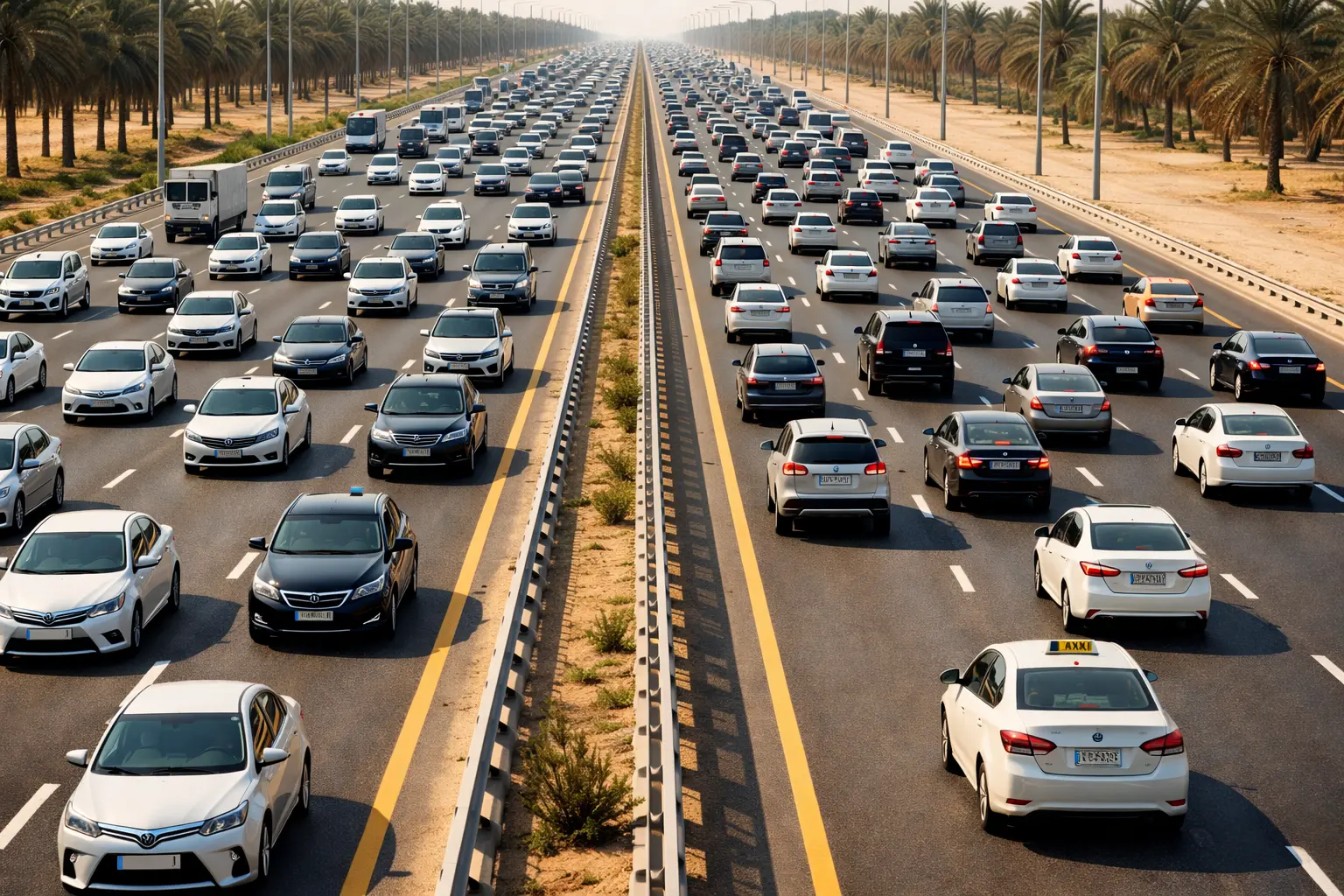
Sharjah to Dubai traffic has become a daily ordeal for thousands of commuters. Major routes experience severe congestion during peak hours. Morning rush hour builds across main arterial roads and creates delays that affect travel times and productivity. The situation has intensified in recent weeks. Multiple accidents and heavy vehicle flow compound the problem. We've observed that sharjah to dubai traffic today continues to challenge even the most experienced drivers who plan their travel. Key corridors like Al Ittihad Road and Sheik Mohamed bin Zayed Road face persistent bottlenecks, especially during sharjah to dubai morning traffic. You can guide through these challenges better if you understand the current traffic patterns and sharjah to dubai traffic time windows. This piece gets into the affected routes and provides practical strategies to minimize your commute delays.
Morning Rush Hour Creates Gridlock on Key Dubai-Sharjah Corridors
E11 Sheik Mohammed bin Zayed Road remains congested between Al Nahda and Al Qusais. Traffic crawls at speeds below 30 km/h during peak morning hours. The World Government Summit 2026 continues to affect traffic flow and creates bottlenecks that extend delays up to 45 minutes on some roads. The Al Ittihad Road corridor experiences severe slowdowns, especially near Dubai-Sharjah border crossing points.
The Maliha Road interchange has become a pressure point. Vehicles back up for several kilometers as commuters attempt to bypass main highways. Bumper-to-bumper traffic stretches from Muwaileh Commercial area to Qusais Cemetery on E311. Multiple accidents on Al Ittihad Street near the Al Mamzar area caused tailbacks for motorists heading into Dubai. A separate accident on Al Khail Road triggered congestion passing Jumeirah Village Circle.
Internal roads face equal strain. Damascus Street in the Al Qusais Industrial area reports congestion and adds pressure on local bypass routes. Al Wahda Street through Al Khalidiya district slowed to a crawl. Sharjah Ring Road sees volumes near Industrial Area 9, while Sheik Mohammed bin Zayed Road faces congestion around Industrial Area 13.
Sharjah Police reports that failure to follow mandatory lanes and sudden lane changes at intersections continue to cause traffic congestion and serious road accidents.
How Are Different Areas Responding to Traffic Chaos?
Authorities in both emirates have mobilized infrastructure upgrades and enforcement measures to address the mounting sharjah to dubai traffic crisis. Dubai's Roads and Transport Authority completed traffic projects in Business Bay that expanded important locations along major streets and resolved issues where residents previously spent more than 30 minutes crossing the area during peak hours. The authority implements rapid traffic solutions at 45 locations throughout the emirate. These measures are expected to reduce travel times by 15 to 30 percent.
The UAE announced plans to spend AED 170 billion on transport and road projects over the next five years. Sharjah authorities allocated Dh49m for a road project near Industrial Areas 15 and 17, designed to reduce congestion near the National Paints Bridge along the Dubai border. An additional Dh150m supports development of more than 66 km of roads in central and eastern regions.
Corporate sectors adopt technology-driven logistics to manage sharjah to dubai morning traffic. Organizations change from traditional bus rentals to AI-optimized shuttle services that minimize route deviations and reduce employee commute stress. Smart admin dashboards enable facility managers to track shuttle locations and communicate delays in advance.
Traffic control centers monitor roads around the clock to detect bottlenecks. Field inspection teams assess conditions and recommend solutions. Sharjah Police intensified enforcement against improper lane changes and cited these violations as main causes of both congestion and road accidents.
What Should Commuters Do to Avoid Delays?
Motorists should allow extra travel time and explore alternative routes to guide through sharjah to dubai traffic. The Ministry of Energy and Infrastructure closed the bypass lane exit from Dubai towards Sharjah at Bridge No. 7 on Emirates Road as part of ongoing development work and urged drivers to follow directional signs for alternative paths.
Checking immediate traffic conditions before departure proves vital for commuters. Navigation apps like Waze or Google Maps provide accurate route information, while downloading official RTA and SRTA apps delivers precise timing data. Leaving 30 minutes earlier often avoids peak congestion.
Route selection substantially affects sharjah to dubai traffic time. E611 Emirates Road bypasses heavy E11 congestion, especially when using the Academic City route showing moderate flow toward Dubai Silicon Oasis and Festival City. E311 Sheik Mohammed Bin Zayed Road loops around outer areas and offers faster travel during peak periods despite longer distance. Off-peak journeys complete in 40 to 50 minutes. Rush hour extends beyond an hour.
Authorities stress safety protocols during congested conditions. Drivers must maintain increased following distances and avoid using hazard lights while moving. Dubai Police and RTA recommend thinking over public transport options where feasible. Monitoring Waze alerts remains critical before committing to E611, as residual disruption from infrastructure work may affect flow.
Stay Protected with Vehicle Insurance & Roadside Assistance
Passing through heavy traffic between Sharjah and Dubai during peak hours is very common with the rapid urbanization. This causes greater congestion and chances of any minor accidents or breakdowns. Having comprehensive coverage and roadside assistance through vehicle insurance for Dubai Sharjah traffic is more important than ever to remain covered if your vehicle breaks down in heavy traffic, such as on E11 or E311. You can easily get your vehicle insurance by choosing any of the existing comprehensive vehicle insurances online within minutes.
Conclusion
We've explored how sharjah to dubai traffic continues to challenge daily commuters on major corridors. Authorities have responded with infrastructure investments and enforcement measures worth billions of dirhams. Commuters can work around these delays through early departures, alternative route selection, and up-to-the-minute traffic updates. Your morning commute doesn't need to be stressful. Proper planning and the strategies we've outlined can reduce travel time and help you arrive at your destination efficiently.
Key Takeaways
Here are the essential insights for navigating the challenging Sharjah to Dubai traffic situation:
- Peak hour congestion severely impacts major routes: E11 and E311 experience speeds below 30 km/h during morning rush, with delays extending up to 45 minutes on key corridors.
- Authorities are investing heavily in solutions: UAE allocated AED 170 billion for transport projects over five years, with Dubai implementing rapid traffic solutions at 45 locations to reduce journey times by 15-30%.
- Strategic route planning can save significant time: Use E611 Emirates Road or E311 Sheik Mohammed Bin Zayed Road as alternatives to congested E11, and allow extra 30 minutes travel time during peak hours.
- Real-time monitoring is essential for commuters: Download RTA and SRTA apps, check Google Maps or Waze before departure, and consider off-peak travel when journeys complete in 40-50 minutes versus over an hour during rush hour.
The key to managing this daily challenge lies in combining proper planning with available technology tools and alternative route knowledge. While infrastructure improvements are underway, immediate relief comes from adapting your travel strategy to current conditions.