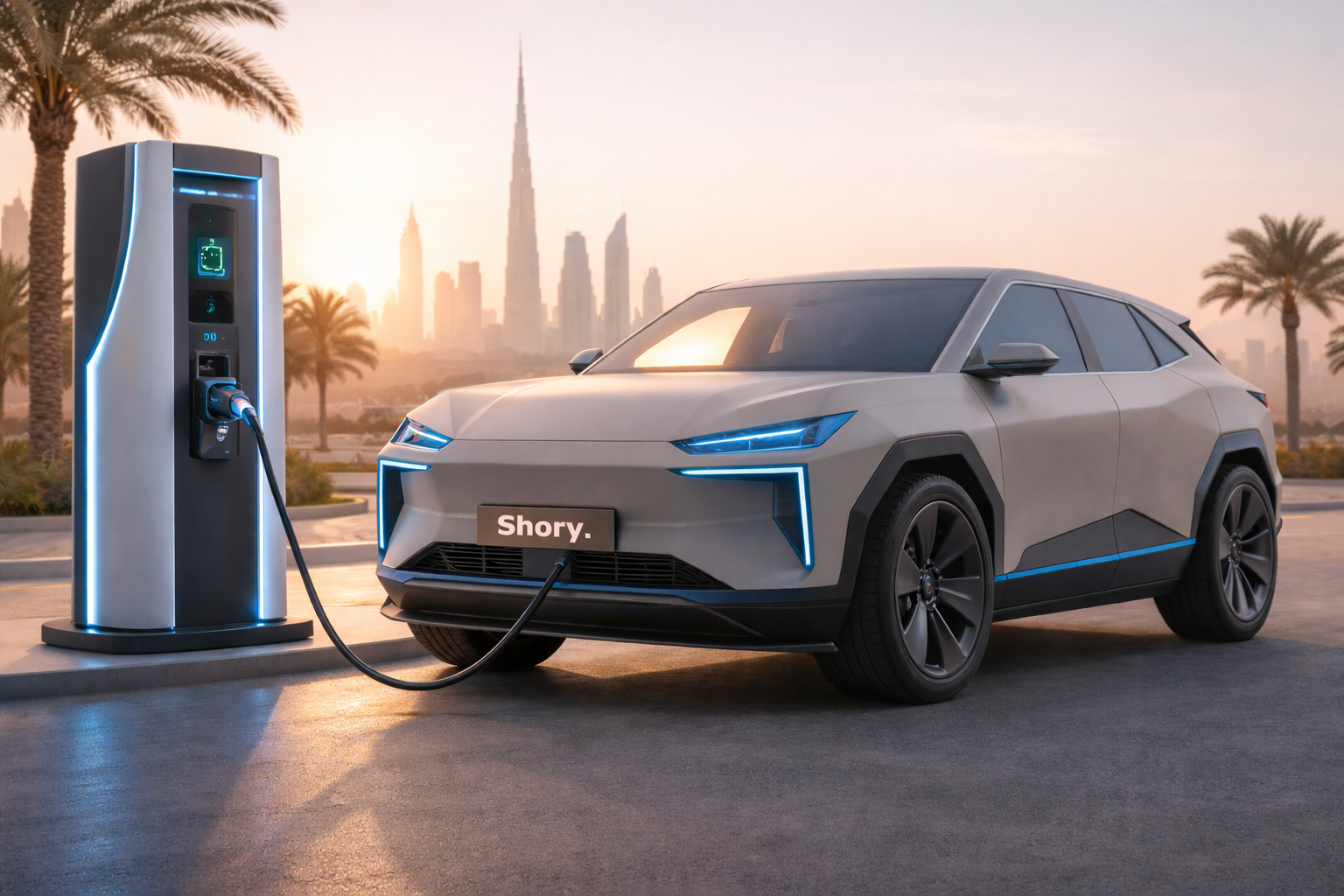
We're witnessing a transformative change in sustainable mobility as EV charging stations UAE infrastructure reaches parks and beaches in Dubai of all types. Dubai Municipality has launched a Dh150-million initiative to install supercharging stations in 600 parking spaces at public recreational facilities. UAEV partnered to deliver this project, which responds to a growing need. 52 per cent of UAE residents buy and lease electric vehicles now. The expansion of EV charging stations in UAE supports the national target of achieving 50 per cent electric vehicle adoption by 2050 and transforms public spaces into smart, sustainable environments.
Dubai Municipality Launches Dh150 Million EV Charging Initiative
Dubai Municipality announced the Dh150-million initiative to expand EV charging stations in UAE through collaboration with Emarat EV Charging Stations Company (UAEV). This investment represents a substantial commitment to building sustainable infrastructure across the emirate's public recreational spaces.
Partnership with UAEV Brings Supercharging Infrastructure
The partnership positions UAEV as the implementation partner responsible for deploying supercharging infrastructure at key community destinations. Sharif Al Olama, Undersecretary for Energy and Petroleum Affairs at the Ministry of Energy and Infrastructure and Chairman of UAEV, said the collaboration marks a major step in integrating EV solutions into community spaces. "Through our partnership with Dubai Municipality, UAEV is proud to expand access to EV charging infrastructure across key community destinations, including parks, markets, and public facilities," he stated.
The partnership reflects a shared commitment to supporting the UAE's clean mobility ambitions and enhancing quality of life across the community. UAEV wants to make sustainable mobility more convenient and available to residents and visitors by integrating charging solutions into everyday locations.
600 Parking Spaces Across Parks and Beaches Targeted
The initiative targets 600 parking spaces across public parks, beaches and recreational facilities throughout Dubai. EV charging stations UAE will reach high-footfall destinations where residents and visitors spend extended periods. The first flagship phase will see the installation of 75 EV supercharging stations across 150 parking bays within the next two years.
The charging infrastructure will be deployed at major destination parks, neighborhood parks and public beaches strategically. This wide geographic coverage will give convenient and available charging facilities across Dubai's public spaces network, supporting both residents and visitors. The rollout prioritizes communities and high-traffic destinations, making EV charging available during recreational activities.
Public-Private Partnership Model Drives Implementation
The Dh150-million project is delivered through a Public-Private Partnership model that aligns with the Dubai Economic Agenda D33. This framework lets Dubai Municipality use private sector expertise and investment while the municipality retains control of infrastructure development. The PPP approach addresses financial, logistical and technological challenges associated with large-scale infrastructure projects.
Badr Anwahi, CEO of the Public Facilities Agency at Dubai Municipality, explained that the project reflects a broader transformation in how public spaces are designed and managed. "This initiative reflects Dubai Municipality's commitment to transforming public spaces into integrated, future-ready environments that support evolving lifestyles and sustainable mobility," he noted. The municipality lets residents and visitors make more environmentally responsible choices as part of their daily routines by embedding EV charging infrastructure across parks and beaches.
The initiative supports Dubai's Greenery and Parks Strategy 2040. It positions public spaces not just as recreational destinations but as active enablers of the city's sustainable mobility ecosystem. The project represents a key milestone in advancing UAEV's ambitions and supports the transformational initiative, 'A Global Market for Electric Vehicles'.
How Will the Rollout Phase Progress?
The implementation follows a carefully structured timeline designed to balance rapid deployment with quality infrastructure. UAEV will make 75 supercharging stations operational during the first flagship phase. These stations will span 150 parking bays and establish the foundation for broader expansion.
75 Supercharging Stations in First Two Years
The original rollout spans two years. UAEV will install and commission the first wave of EV charging stations UAE during this period across selected public spaces. Each supercharging station will serve two parking bays and create 150 dedicated charging spots for electric vehicle owners. This phased approach allows authorities to test operational models, gather user feedback, and refine deployment strategies before scaling to the remaining 450 parking spaces.
The two-year timeframe reflects the complexity of integrating charging infrastructure into existing public facilities. Site preparation, electrical grid connections, and permitting requirements demand careful coordination between Dubai Municipality, UAEV, and utility providers. The staged implementation ensures quality control standards are managed to keep across all installations.
Strategic Geographic Coverage in High-Footfall Areas
Geographic distribution drives the placement strategy for ev charging stations in uae under this initiative. The charging infrastructure will be deployed across major destination parks, neighborhood parks, and public beaches. This ensures convenient and available charging facilities throughout Dubai's public spaces network. The approach prioritizes locations where residents and visitors spend extended periods and makes charging a natural part of recreational activities rather than a separate errand.
The rollout prioritizes wide geographic coverage in communities and high-traffic destinations. Both residents and visitors benefit from this. Electric vehicle owners just need reliable access to charging whatever their location for living or working. The distribution model prevents clustering in a single district. Stations will appear in multiple neighborhoods instead and democratize access to sustainable mobility infrastructure.
Major Destination Parks and Neighborhood Locations Prioritized
High-footfall areas anchor the deployment strategy. Parks, beachfronts, and community hubs that already attract substantial visitor numbers are the specific targets. Major destination parks receive priority because they serve as weekend and holiday gathering points for families. They offer natural opportunities for extended charging sessions. A family spending three hours at a park can fully charge their vehicle while children play and adults relax.
Neighborhood parks complement the major destinations by serving daily needs. Residents visiting local parks for morning walks or evening exercise can top up their batteries during short stops. Public beaches accommodate longer visits where charging becomes natural. The combination of major destinations and neighborhood locations creates a layered network that serves different usage patterns. Some drivers need quick charges during routine activities. Others benefit from longer charging sessions during leisure time.
The strategic selection of these locations transforms ev charging stations in uae from isolated utilities into integrated community amenities. Dubai Municipality removes a most important barrier to electric vehicle adoption by embedding charging infrastructure where people already gather: the inconvenience of finding and accessing charging points during busy schedules.
What Benefits Will EV Owners Experience?
EV owners gain practical advantages through this infrastructure placement in recreational settings. The initiative transforms how drivers approach vehicle charging by eliminating the separation between utility tasks and leisure time.
Charging While Enjoying Recreational Activities
Visitors can charge their vehicles while enjoying outdoor recreation, sports, family activities, children's play areas, swimming, and waterfront promenades. This dual benefit addresses a common barrier to EV adoption: the perception that charging requires dedicated time and inconvenience. A family spending an afternoon at the beach can return to a fully charged vehicle after hours of waterfront recreation. Morning joggers using park facilities can top up their batteries during exercise routines similarly.
The integration extends to multiple activity types. Sports enthusiasts using park facilities for football, tennis, or cycling benefit from charging during training sessions. Parents accompanying children to play areas no longer view charging as a separate errand but as an automatic process occurring during family time. Beachgoers swimming or walking along waterfront promenades gain the same advantage. Authorities make clean transportation more available while improving the visitor experience overall by embedding ev charging stations in uae within these high-footfall destinations.
Smooth Combination into Daily Routines
This smooth combination encourages more residents to adopt EVs by making charging a natural part of everyday life. Dubai Municipality redefines public spaces as critical components of the city's future urban ecosystem, where recreation, sustainability, and mobility intersect. EV owners simply charge wherever their daily activities take them instead of planning trips around charging station locations.
The infrastructure placement strategy targets locations where residents and visitors already spend extended periods specifically. Charging becomes an incidental benefit rather than a primary destination then. Authorities enable residents and visitors to make more environmentally responsible choices as part of their daily routines while boosting the overall quality and availability of Dubai's public realm. The approach removes friction from EV ownership by lining up infrastructure with existing behavior patterns. Drivers no longer modify their schedules to accommodate charging needs.
Boosted Availability in Dubai's Public Spaces
The strategic deployment in major destination parks, neighborhood parks, and public beaches will give convenient and available charging facilities throughout Dubai's public spaces network. This geographic distribution supports both residents and tourists and creates multiple access points throughout the emirate. The wide coverage in communities and high-traffic destinations eliminates range anxiety by guaranteeing nearby charging options whatever the location especially.
The project boosts availability to clean transport solutions while elevating the visitor experience overall. Public spaces evolve beyond recreation into integrated, smart environments that support mobility, sustainability, and wellbeing. EV owners benefit from infrastructure that matches their lifestyle patterns rather than requiring adaptation to limited charging locations correspondingly.
How Does This Initiative Align with UAE's Clean Mobility Vision?
The Dh150-million charging infrastructure project supports national decarbonisation targets outlined in multiple strategic frameworks. Dubai Municipality advances policy objectives that span mobility, energy and economic development as it expands ev charging stations uae across public recreational spaces.
Supporting 50% EV Adoption Target by 2050
The UAE has set a national target of increasing electric and hybrid vehicles to 50% of all vehicles on roads by 2050. This ambitious goal requires expansion of charging infrastructure to accommodate projected demand. Dubai wants to have more than 42,000 electric cars on its roads by 2030. The park and beach charging stations contribute to this target and eliminate infrastructure gaps that deter potential EV buyers.
Al Tayer affirmed that DEWA continues to advance green mobility and support Dubai's plans to transition to environmentally friendly transport, in line with national efforts to increase the share of electric and hybrid vehicles. The initiative supports the Dubai Clean Energy Strategy 2050 and the Dubai Net Zero Carbon Emissions Strategy 2050. PwC estimates that EVs will have a market share of more than 15%, around 58,000 vehicles, of new passenger car and light commercial vehicle sales across the UAE by 2030. The share will have increased to 25%, equivalent to around 110,500 vehicles, by 2035.
Contribution to Net Zero by 2050 Strategic Initiative
The project fits with the UAE Net Zero by 2050 Strategic Initiative and makes the UAE the first Middle East and North Africa nation to commit to net-zero emissions by mid-century. The national drive wants to underpin dynamic economic growth among positive environmental effects. Emissions will be almost 11% lower than if the national fleet was purely made up of internal combustion engine vehicles if the UAE's EV targets for 2035 are achieved.
The initiative supports the UAE Energy Strategy 2050, which pursues a combination of renewable and nuclear energy sources to achieve carbon neutrality. The Ministry of Climate Change and Environment coordinates the wide-ranging initiatives of over 45 major stakeholders to meet targets for each sector. Transport represents one of six key sectors, among power, industry, buildings, waste and agriculture. The transition from fossil-fuel to electrified mobility constitutes one of the biggest industrial and market changes, with constructive policy and continued technology innovation required to lower costs and increase efficiency.
Reinforcing Dubai Economic Agenda D33 Objectives
The project is delivered through a Public-Private Partnership model that fits with the Dubai Economic Agenda D33 and reinforces Dubai's commitment to sustainable urban infrastructure. The agenda wants to double Dubai's economy over the next decade and unite its position among the top three global cities. Strong private sector participation in developing sustainable urban infrastructure supports D33's transformational projects. Dubai's transition to eco-friendly transportation enhances its profile as the world's best city to live, work and visit while uniting its status as one of the globe's top three urban economies at a growing pace.
Conclusion
Dubai's Dh150-million investment in 600 EV charging stations across parks and beaches marks a most important milestone in sustainable urban development. This initiative matches the UAE's ambitious target of achieving 50% electric vehicle adoption by 2050. Placement at recreational destinations changes charging from an inconvenience into an uninterrupted daily activity. 52% of residents already choose electric vehicles, and the infrastructure expansion addresses what the market needs. This public-private partnership demonstrates how smart planning can support environmental goals and enhance community experiences at the same time. Dubai positions itself as a global leader in sustainable mobility and creates integrated spaces where recreation and clean transportation intersect.